Home › AI Native Developers
Senior developers who master AI as well as they master their craft
AI is changing software development. We make sure your team is ready for it.
The role of the developer is changing faster than most delivery organisations can keep up with. What was a handy autocomplete feature a couple of years ago has become a core part of how senior teams accelerate roadmaps, review code and safeguard quality.
Anyone looking for development capacity today isn’t just looking for a good developer anymore. You’re looking for someone who knows how to use AI tools to deliver faster, smarter and with less risk.
Every search we run
At SharpMinds, we factor this into every search we run for a client. Our recruiters don’t just screen for stack, seniority and cultural fit, they also screen for AI skill: how a developer applies AI-assisted software development in their day-to-day work, where they draw the line between speeding up and staying in control, and how they use AI-powered software development without giving up quality or architecture. That means you’re not just bringing in extra hands, you’re potentially bringing in extra AI expertise for your existing team as well.
What is AI-assisted software development, exactly?
AI-assisted software development is the use of AI, large language models and, increasingly, autonomous AI agents to support developers across the full development process: from code generation and debugging to testing, documentation and understanding existing codebases. It goes further than smart autocomplete. Modern AI tools don’t just predict the next line of code, they understand the context of a project, flag bugs before they reach production, and independently suggest improvements.
For technical leaders, this shifts what they can reasonably expect from their delivery team. Not every developer who “uses AI” actually uses it effectively. The difference comes down to experience: knowing when to trust an AI suggestion, when to set it aside, and how to combine AI accelerated development with code review, testing and architectural discipline. That distinction is exactly what we select for.
AI native developers: the new baseline, not the exception
We deliberately call this new generation of developers AI native developers. Not because they can’t code without AI, but because AI has become a natural part of how they work, the same way an IDE or version control has been for years. An AI native developer knows how to use an AI agent to speed up a larger share of repetitive work, while keeping ownership of architecture, quality and the intent behind the code.
When we search for a client, we weigh this explicitly. We map out developers who already apply AI-assisted software development structurally within their field, and who can explain and account for it: why they use a particular tool, where the risks lie, and how they prevent AI-powered software development from creating more technical debt instead of less.
TESTIMONIALS
Don't just take our word for it. Hear it from our clients.
“You could simply launch a few small projects that get handed off to different teams, but that isn’t efficient. That’s why we were looking for a long-term partner. Through SharpMinds, we hire developers who become an integral part of the team—not as replacements, but as an expansion. It’s about working together to build something great.”
CTO, Skydreams

How fast this is moving
The pace at which this field is changing is unprecedented. What was still experimental two years ago is now part of the daily workflow at many scale-ups and established software companies. Large-scale research into AI-assisted software development, such as the annual DORA report from Google Cloud, shows that AI mainly acts as an amplifier: it magnifies both an organisation’s strengths and its weaknesses.
Teams with a healthy delivery foundation, clear processes and strong technical leadership see their lead grow. Teams without that foundation see existing problems escalate faster.

real speed — vs — appearance of speed
That makes the choice of who you bring in more important, not less. AI accelerated development only creates value when the people using it can tell the difference between real speed and the appearance of speed.
A developer who uses AI to produce code faster without truly understanding it just pushes the risk further down the line. A developer who works AI native uses the same tools to arrive at a better-considered solution, faster.

Why this matters for your delivery team
As a technical leader, you know the tension well: the roadmap needs to move forward, the core needs to stay stable, and the team can’t buckle under the pressure. AI-assisted software development can ease that tension, but only when the right people are applying it. Used the wrong way, it just adds noise, risk and extra review work.
That’s why at SharpMinds we always search for the combination: senior developers from Europe who integrate quickly into your existing way of working, and who have demonstrable experience with AI-powered software development within their field. Not as a bolt-on, but as part of how they already work. That way you’re not just adding capacity to your team, you’re potentially adding knowledge and experience your own people are still building up.
Our method
At SharpMinds we always strive for long-term collaboration. By offering the developers a nice and challenging workplace, they will not only continue to work for a company but also perform better. A win-win we love to see.
Acquaintance
The first introduction is aimed at discovering whether our remote development solution suits your problem, but also fits your organization. We look at where you are now in terms of development, where you want to go and what requirements are set.
Team profile
If the use of remote developers proves to be the solution to your problem, a technical meeting will be scheduled. In this meeting, your current development team is discussed and it is examined with which profiles it should be supplemented. What hard and soft skills should your remote software developers have? We can only recruit properly with this information.
Recruitment & intake
We look for suitable candidates based on the team profile and the vacancy. They are first invited for an intake to check whether their English language skills are sufficient, whether they have the right soft skills and whether they fit within your corporate culture. In the second interview, they have a technical meeting with one of our specialists to see if their hard skills also match your wishes. If there is a match in our opinion, the candidates will be presented to you.
Application
After the candidates have been screened by our recruiters, they will be introduced to you. Based on the profiles, you can decide for yourself who you invite for an interview. After this, the candidate can go through your own regular application procedure.
Onboarding
The candidate follows your own onboarding procedure. However, with our experience we like to think along and offer a helping hand if necessary.
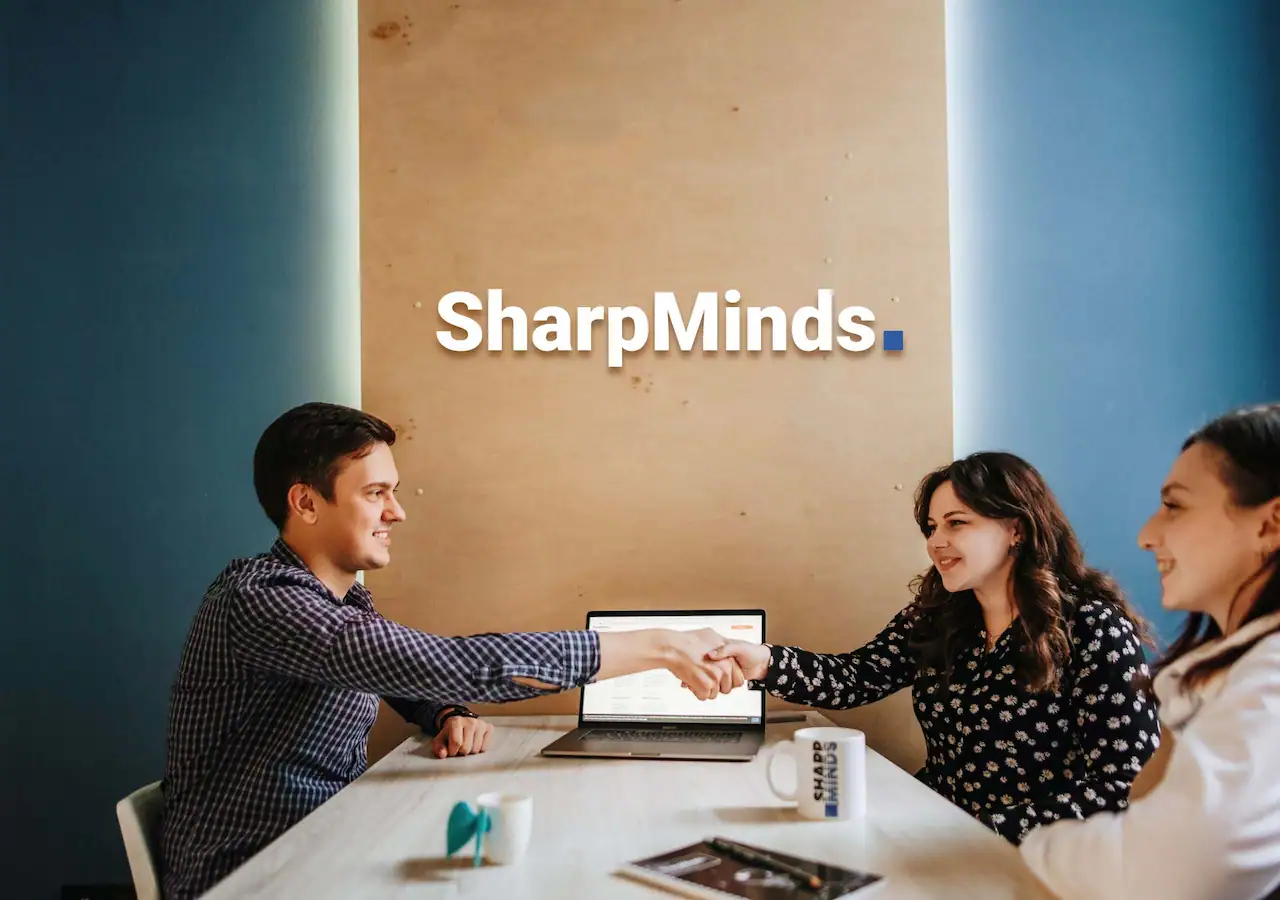
Acquaintance
The first introduction is aimed at discovering whether our remote development solution suits your problem, but also fits your organization. We look at where you are now in terms of development, where you want to go and what requirements are set.
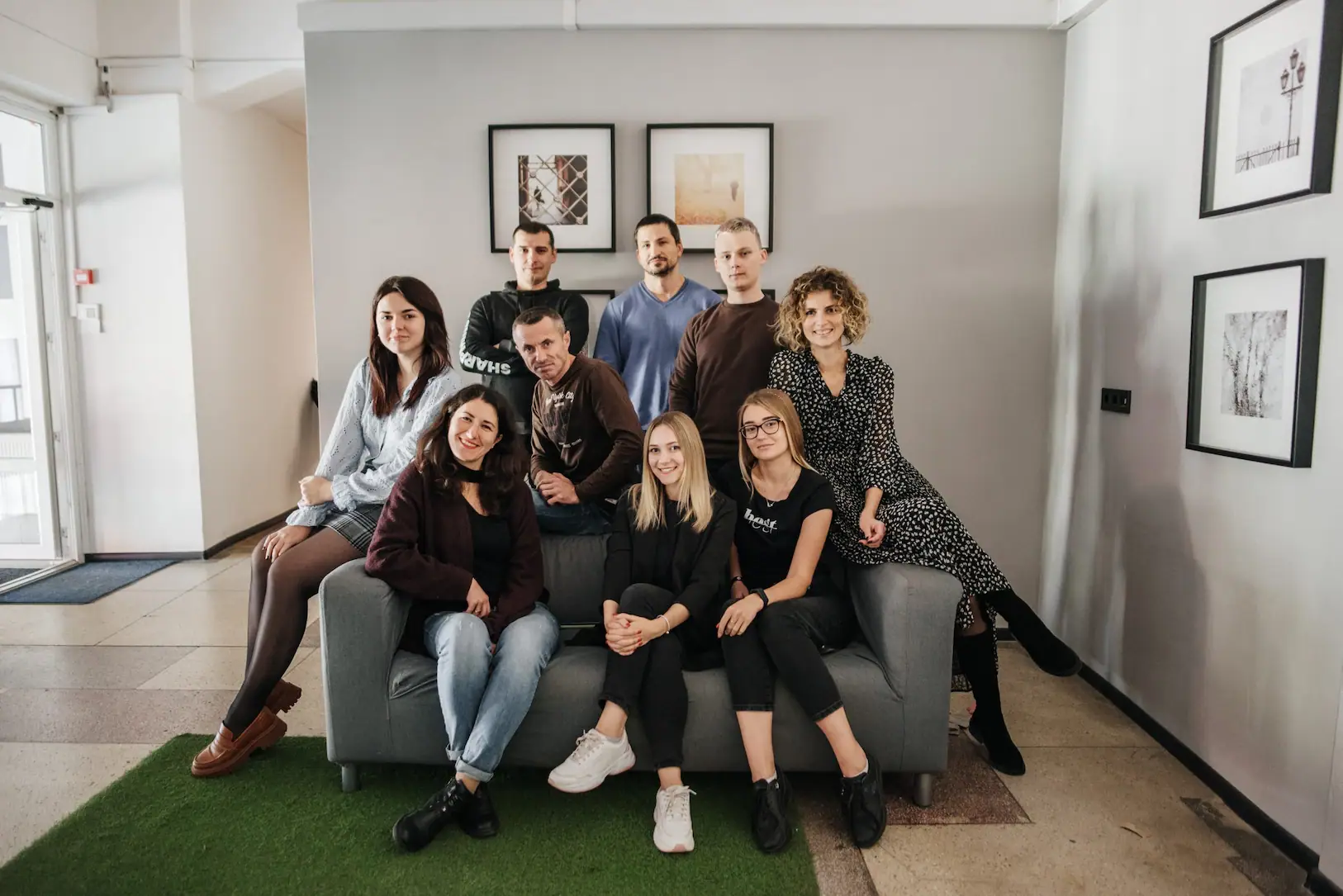
Team profile
If the use of remote developers proves to be the solution to your problem, a technical meeting will be scheduled. In this meeting, your current development team is discussed and it is examined with which profiles it should be supplemented. What hard and soft skills should your remote software developers have? We can only recruit properly with this information.

Recruitment & intake
We look for suitable candidates based on the team profile and the vacancy. They are first invited for an intake to check whether their English language skills are sufficient, whether they have the right soft skills and whether they fit within your corporate culture. In the second interview, they have a technical meeting with one of our specialists to see if their hard skills also match your wishes. If there is a match in our opinion, the candidates will be presented to you.

Application
After the candidates have been screened by our recruiters, they will be introduced to you. Based on the profiles, you can decide for yourself who you invite for an interview. After this, the candidate can go through your own regular application procedure.

Onboarding
The candidate follows your own onboarding procedure. However, with our experience we like to think along and offer a helping hand if necessary.